
Celebrating 25 Years!
In 2026, the Brattle Film Foundation celebrates its 25th anniversary as a nonprofit arts organization. Our status as a beloved repertory cinema began all the way back in 1953, making us one of the longest-running independent arthouses in the United States. Under the banner of the BFF, The Brattle has remained committed to that independence, programming films that won’t be shown anywhere else and hosting events with the artistic and scholarly voices who make our world a brighter, better place.
Read on to discover The Brattle’s rich history and the latest updates to our iconic location.
Opening Eyes Since 2001
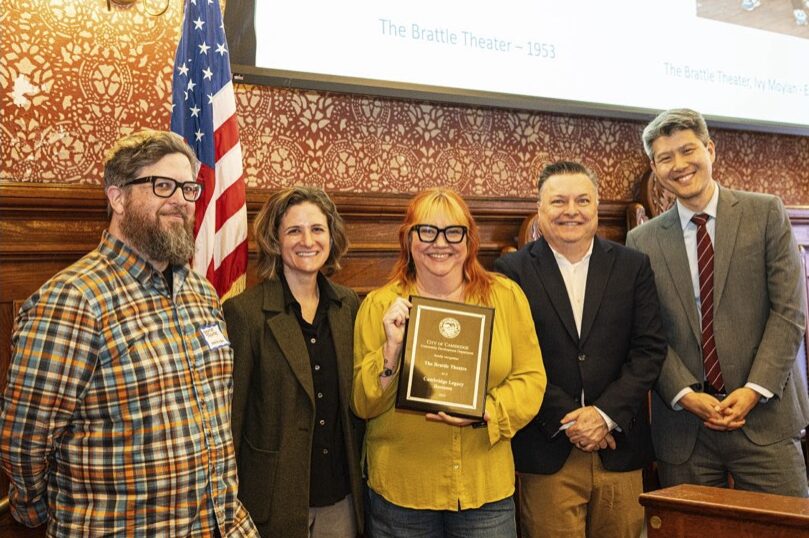
Ned and Ivy accepting the Legacy Business Award from the City of Cambridge in 2025
When executive director Ivy Moylan and creative director Ned Hinkle took over operations and transitioned The Brattle to a nonprofit in 2001, independent cinemas were struggling. The rise of home video—later compounded by the fallout of 9/11—kept audiences home, and smaller indie cinemas were hit hardest of all. Because of these challenges, Ivy and Ned founded the Brattle Film Foundation, believing the theater’s place in the community was vital, precious, and beloved. They set out to create a space where film would be celebrated as a popular and fine art with important cultural and historical value. Thanks to a strong relationship with the building’s landlord, the team came together to maintain The Brattle as a grassroots cultural landmark.
The Brattle Triumphant
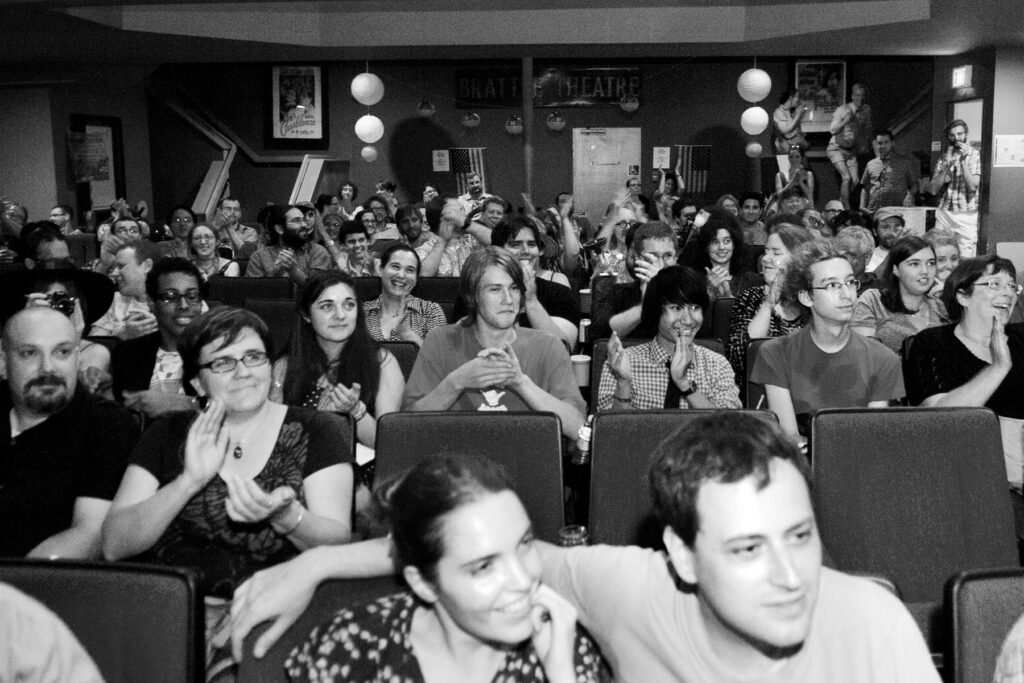
A Brattle audience enjoys the 2012 Trailer Treats event
But Ned and Ivy’s ambitious takeover was far from easy. To pay for a slew of necessary renovations to the historic space and preserve the customer experience, The Brattle needed help. Throughout the challenging 2000s, The Brattle stayed afloat thanks to memberships, donations, and, of course, an enthusiastic core audience. Thankfully, the pendulum began to swing the other way starting in the 2010s. With the theater updated with the latest projection equipment, and beer and wine available at the concessions stand, a new generation of audiences rediscovered the magic of seeing films as they were meant to be seen: “In the dark, with strangers, on the big screen.”
When COVID began its own takeover in 2020, The Brattle had to close its doors for fifteen months. During the dark days without public screenings, the community came together to raise enough funds to keep the theater going. In July 2021, The Brattle fully reopened its doors to the public, welcoming audiences to rediscover the magic of the communal theater experience.
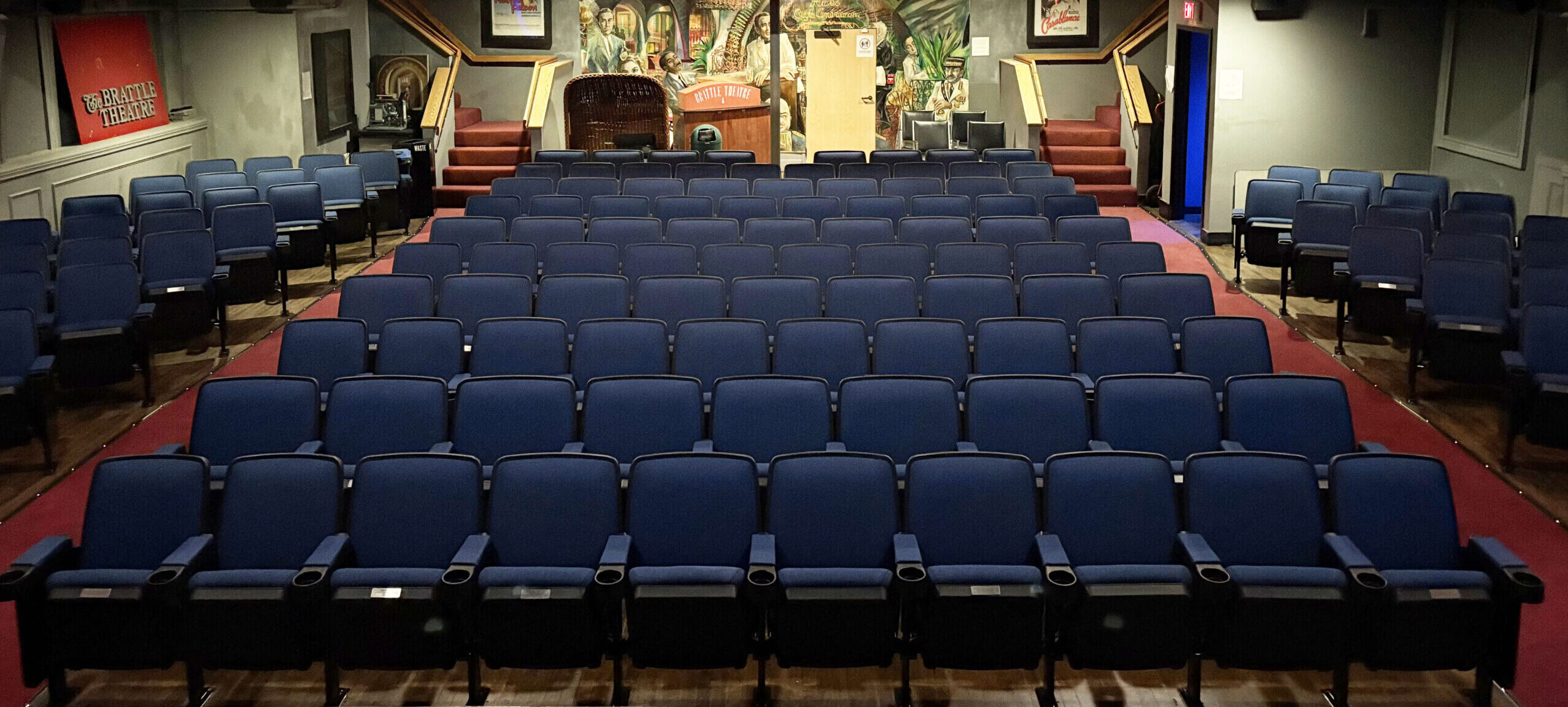
Since then, The Brattle has grown again and again, with each year bringing new fans and returning members alike. Donors and members were crucial in our latest update: an array of beautiful new seats, with improved sightlines and refreshed lighting!
Live at The Brattle
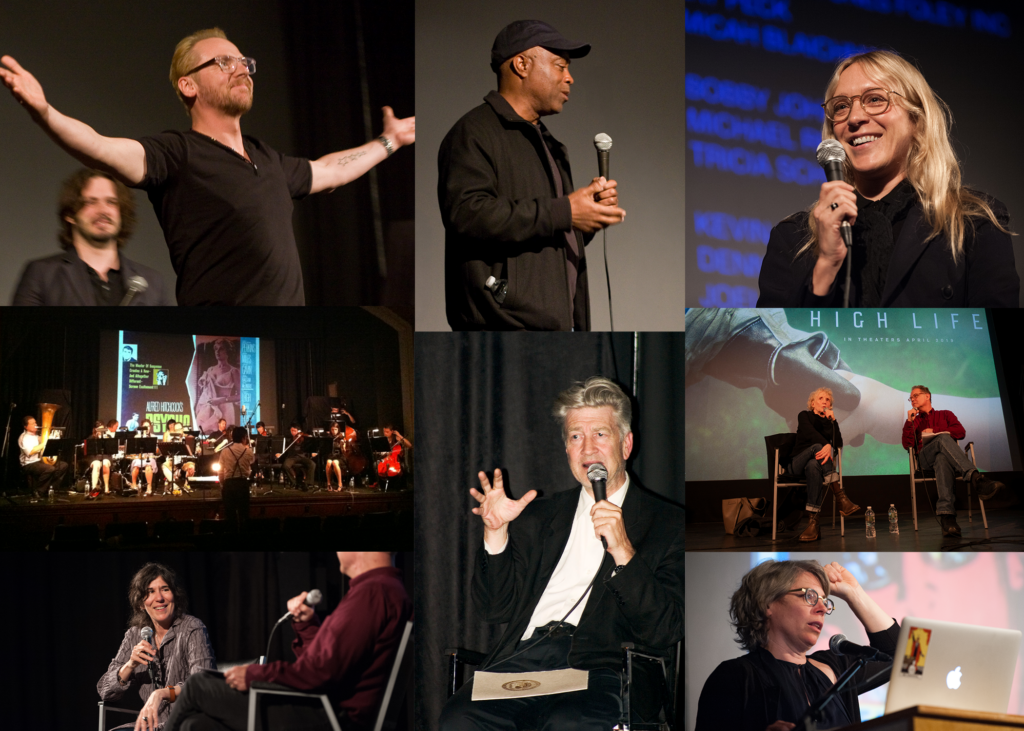
Guests to The Brattle stage over the years. Clockwise from top left: Edgar Wright & Simon Pegg, Charles Burnett, Chloe Sevigny, Claire Denis & Ty Burr, Jill Lepore, David Lynch, Debra Granik, Cirkestra and Boston String Players
From the beginning, community engagement was priority one for the BFF. While independent premieres and screenings of classics remain a cornerstone of The Brattle’s programming, a wide range of live events bring people together to share in a more up-close-and-personal appreciation of the arts. An ever-growing list of visiting artists and filmmakers has allowed audiences to interface with the foremost voices behind the art form we love so much. The Brattle stage has been the site of everything from book readings to live orchestras, not to mention drag shows and martial arts performances.
Year after year, fans pour into The Brattle to attend annual traditions like the Bugs Bunny Film Festival, Oscar watch parties for Brattle members, and Valentine’s Day screenings of Casablanca. And thanks to free educational programs like monthly “Elements of Cinema” screenings and Brattle Film Notes, the theater has lived up to its moniker as “Boston’s unofficial film school.”
A Short History of Brattle Hall
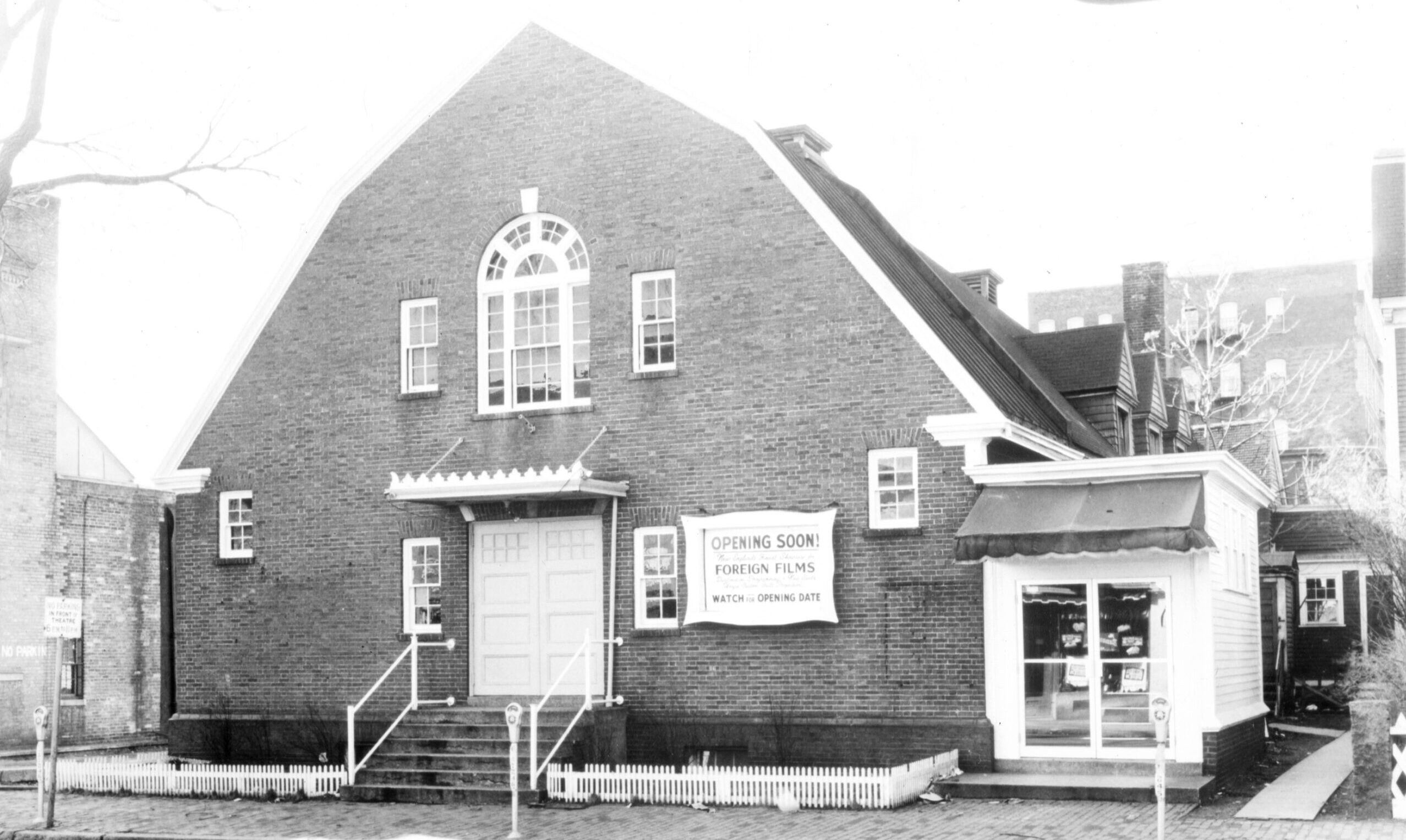
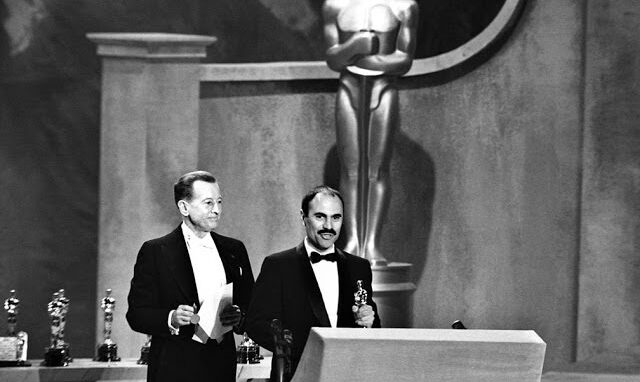
(Left) Brattle Hall, 1953 (Right) Harvey at the 1961 Academy Awards
The folks at The Brattle have long been stewards of their building’s rich history. Brattle Hall was built in 1890 by the Cambridge Social Union (now the Cambridge Center for Adult Education). It first opened as a social hall hosting lectures, dances, and performances.
Throughout its decades of operation, the space has hosted blocked suffragette speeches, blacklisted performers, international auteurs, and countercultural rallying cries. And through it all, this cultural icon has continued to hold its ground in ever-evolving Harvard Square, challenging the societal status quo and inviting audiences to share in a one-of-a-kind filmgoing experience.
In 1953, Cyrus Harvey, Jr. and Bryant Halliday transformed The Brattle into a full-time repertory cinema. Harvey, inspired by French cinemas that freely showcased global and classic films regardless of release date, was a pioneer of this new programming model in the United States. A serial entrepreneur, Harvey launched Janus Films just two years later and eventually founded Crabtree & Evelyn, also born out of Brattle Hall. During the Harvey & Halliday era, The Brattle expanded Americans’ access to international films by dealing directly with filmmakers and producers rather than foreign cultural bureaucracies. The theater hosted Boston premieres of films by Bergman, Fellini, Cocteau, Truffaut, Kurosawa, and Satyajit Ray. Harvey even accepted the Academy Award on behalf of Ingmar Bergman for The Virgin Spring.
Bogart and Beyond
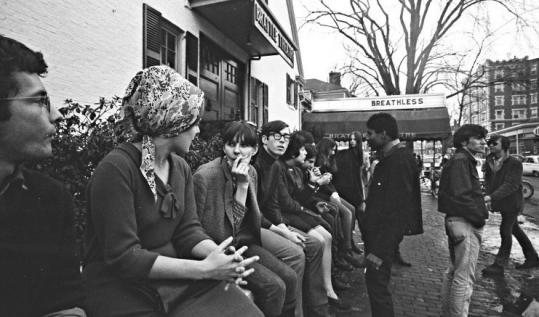
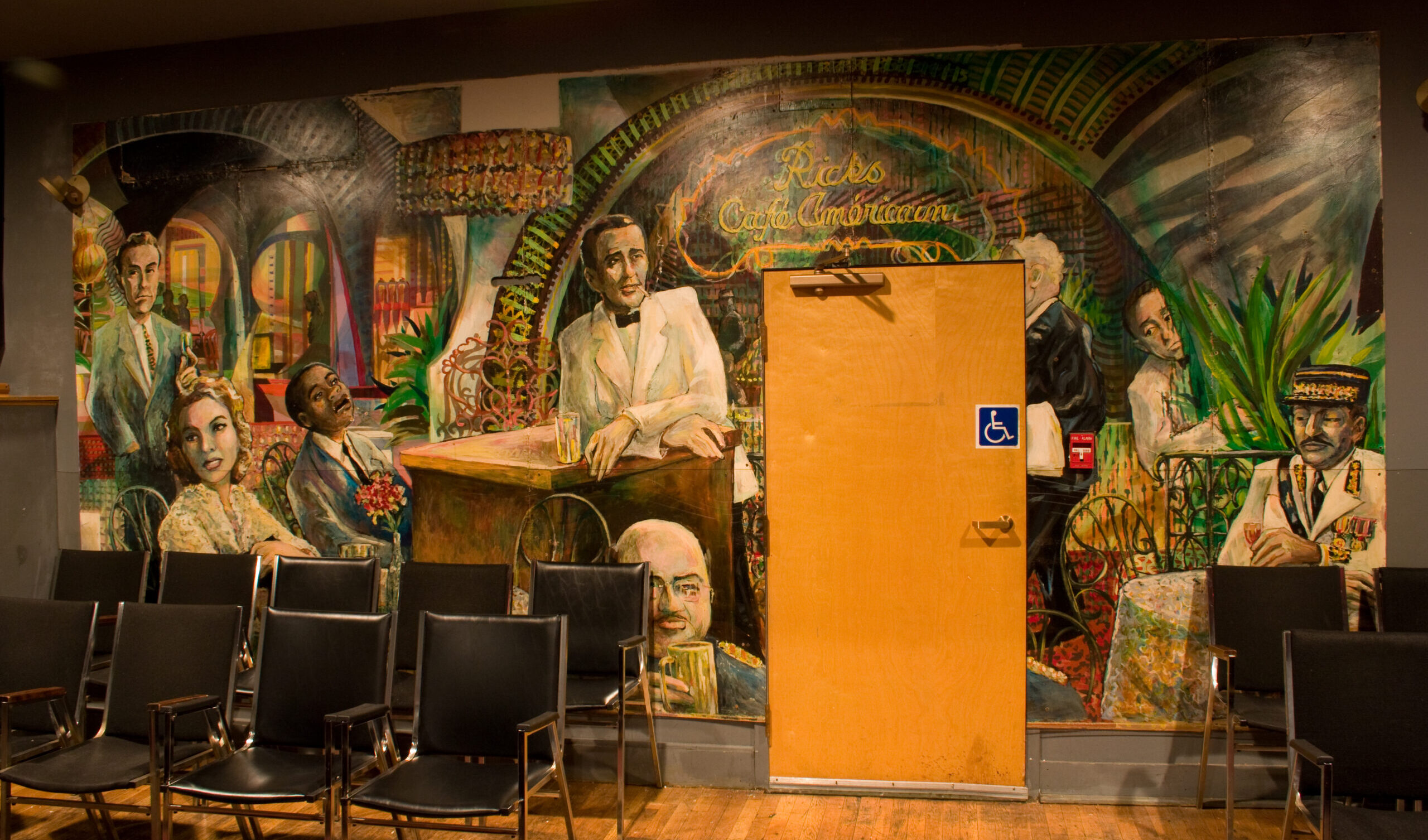
(Left) The Brattle in the 60s (Right) The signature Casablanca mural by David Omar White
And then came the Humphrey Bogart era. Upon his death in 1955, Bogart was admired but not yet a legend. In the early 1960s, The Brattle’s Bogart festivals during Harvard finals became a phenomenon. In her memoir, Lauren Bacall credits The Brattle with fueling Bogart’s posthumous elevation into the cinematic pantheon alongside Monroe, Dean, and Chaplin. The Casablanca Restaurant, a popular Harvard Square haunt named for his most iconic film, stood in Brattle Hall for decades; a segment of its memorable mural now adorns the back of the theater.
Over the decades, the Brattle has continued to shape film culture in Greater Boston and beyond. In the 1970s with the premiere of Eraserhead and the midnight movie craze; the rediscovery of lost classics with Film Noir Mondays and the premiere reissues of Hitchcock’s 1950s masterpieces in the 1980s; the “vertical programming” of the 1990s that helped introduce Boston to Hong Kong Action, Japanese Anime, Women Directors, Queer Cinema, and more. All the while The Brattle was running premieres of vital new films from around the globe and hosting guests like Douglas Adams, Sofia Coppola, Cheryl Dunye, Spalding Gray, Samuel Fuller, Barbara Kopple, George Kuchar, Sidney Lumet, Éric Rohmer, John Sayles, Lee Tamahori, and Robert Wise.
The Show Is Just Getting Started…
Independence can be fragile; without corporate backing or a big endowment, when something goes wrong, there’s no safety net. But that same independence allows The Brattle to remain nimble, responsive, and connected to the voices of individuals who may struggle to be heard in mainstream cinema.
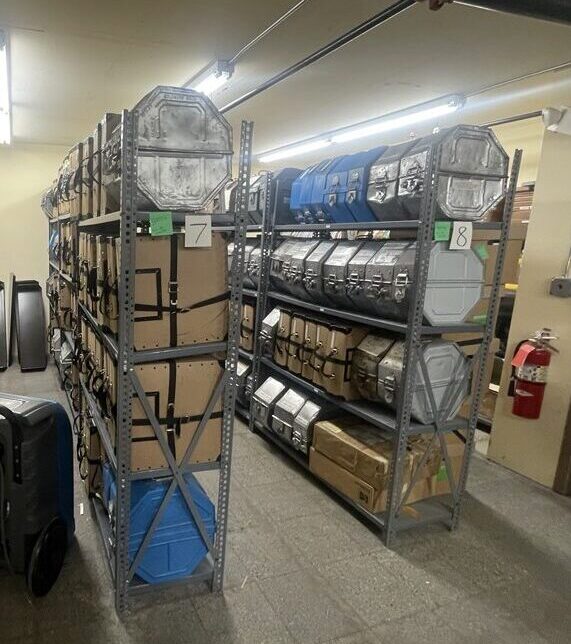
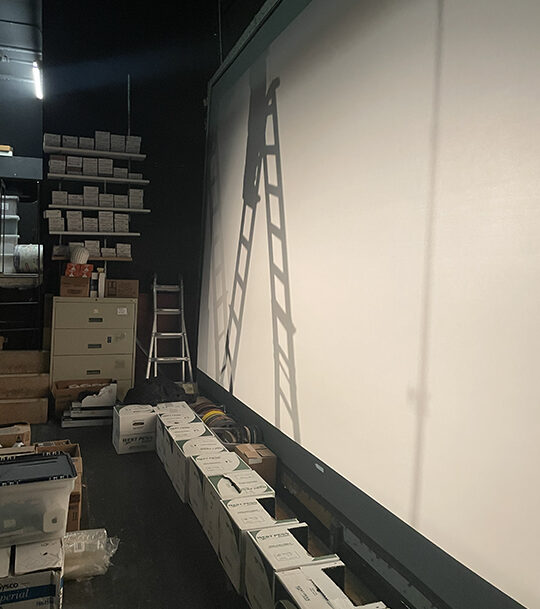
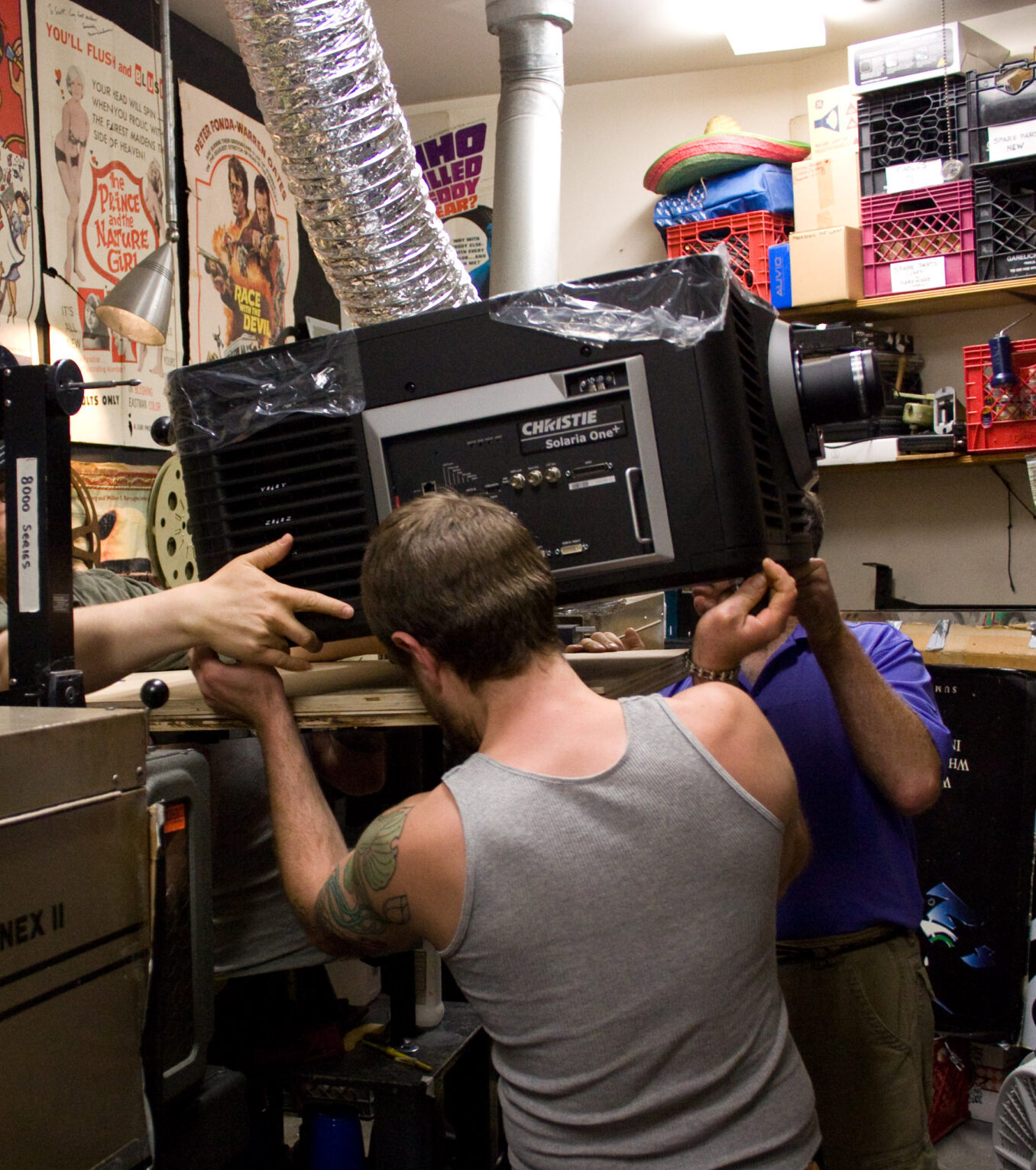
Thanks to passionate community support, The Brattle has implemented 4K laser digital projection, added 7.1 surround sound, replaced its HVAC system, established its own 35mm archive, and, most importantly, maintained the unique, curated programming at the heart of its mission—all while remaining independent.
Here’s to the next wave of mavericks, misfits, and unforgettable movies.
Pass the popcorn—the show’s about to begin.